
Rent, Build, Buy, or Own: Four Ways to Run Private AI
Frontier model APIs, do-it-yourself GPUs, an AI-factory stack, or managed private AI. A straight comparison of the four ways to run AI on your proprietary data, on what actually decides it: cost at scale, lock-in, time to value, and control.
Engineered on the enterprise stack IVI already runs




-1-1-1.png)
How the Four Models Compare
IT and financial leaders evaluating AI infrastructure are really choosing between four approaches, and they trade off along the same axes: control, economics, time to value, and lock-in. The right answer for most organizations is a mix, so it helps to see the options side by side before deciding where each workload belongs.
Frontier model APIs are the fastest way to start and the strongest on general-model quality, but your proprietary data flows through shared third-party systems and per-token pricing becomes unpredictable at volume. Do-it-yourself GPU-as-a-service with open models gives you full control and no vendor markup, in exchange for building and staffing an ML platform team. An AI-factory proprietary stack is a convenient single-vendor bundle, but it is priced on the vendor integrated-stack margin, locked at the fabric and stack layers, and supported against a generic reference design rather than your workload. Managed private AI operates best-of-breed infrastructure for you, with no stack lock-in, full ownership of your model weights, and support aligned to your specific use case.
The sections below define each approach, compare them head to head, and walk the decision dimension by dimension so you can match an approach to your data sensitivity, your current spend, and your appetite for operational work.
The four models, side by side
| Frontier APIs | DIY GPUaaS | AI-Factory Stack | Managed Private AI (Aegis) | |
|---|---|---|---|---|
| Where your data lives | Third-party shared cloud | Infrastructure you govern | Infrastructure you govern | Infrastructure you govern |
| Time to production | Immediate | Quarters | Months | Weeks, starting on rented GPU |
| Operational burden | None | High, you run it all | Moderate to high | Low, co-managed to your team |
| Economics at scale | Expensive, unpredictable per token | Favorable, minus build cost | Favorable, minus vendor margin | Favorable, transparent pass-through |
| Vendor lock-in | Model and pricing dependency | None | Fabric, stack, single vendor | None by design, weights portable |
| Support alignment | None, raw inference | You are the support | Generic reference architecture | Scoped to your use case |
| Best fit | Commodity, low-volume work | Mature in-house ML teams | Single-vendor convenience buyers | Proprietary-data workloads at scale |
Frontier Model APIs
You call a hosted frontier model over an API and pay per token. There is no infrastructure to run and the general-model quality is best in class, which makes this the right answer for a large share of workloads: experimentation, low-volume tasks, and commodity use cases where the data is not sensitive.
The tradeoffs show up specifically on proprietary-data workloads. Your data flows through infrastructure you do not control and cannot fully audit, per-token pricing becomes unpredictable and expensive as volume grows, meaningful fine-tuning on your own data is constrained, and the capability you build is not portable. You are renting access, not building an asset.
Where it fits best: commodity and low-volume workloads, rapid prototyping, and anything where the data is not sensitive and top-tier general reasoning matters more than unit economics. Where it strains: high-volume production on proprietary data, where per-token cost compounds and every request ships your crown-jewel data to a platform you cannot fully audit. Most organizations keep a meaningful share of their AI on frontier APIs. The real question is which workloads should move, not whether APIs have a place.
Do-It-Yourself GPU-as-a-Service
You rent GPU capacity, deploy open-weights models yourself, and run the whole platform in house. You get total control, no vendor markup on the model layer, and no operator dependency. For an organization that already has a mature ML platform team and wants infrastructure only, this is a legitimate path.
The cost is time and organizational capacity. Reaching production maturity means building and staffing an ML platform team, negotiating with GPU providers, standing up observability and on-call, and doing the integration work yourself. For most organizations, that is a multi-quarter build before the first production workload runs reliably, which is a long time to wait when those workloads are already live on an API.
Where it fits best: organizations that already run a mature ML platform team and want raw infrastructure with no operator in the middle. Where it strains: teams that underestimate the operational surface area. The hardware is the easy part. Hiring and keeping ML platform and MLOps engineers, negotiating GPU capacity, building evaluation and observability, and carrying the on-call rotation is a standing commitment, not a one-time project. The failure mode is a half-built platform that never reaches reliable production and quietly becomes a stranded investment.
AI-Factory Proprietary Stacks
You buy an integrated stack from a single vendor: compute, networking fabric, and software delivered as a reference architecture through a channel. It carries a well-known brand and most of the integration work is done for you, which is genuinely convenient.
The tradeoffs are structural. Unit economics are set by the vendor's integrated-stack margin, the networking fabric and software layers create lock-in, you carry single-vendor exposure at every layer, and the support you receive is aligned to the generic reference architecture rather than to your data, your workloads, or your outcomes. The stack is designed to optimize the vendor's position, which is not always the same as optimizing yours.
Where it fits best: buyers who value single-vendor convenience and a recognizable brand on the purchase order, and who treat lock-in as an acceptable trade for a turnkey stack. Where it strains: total cost of ownership and independence. You inherit the vendor fabric, their software layer, their refresh cadence, and their margin at every tier, and the support model is written for the reference architecture rather than your data or your outcome. When a better-priced component or the next GPU generation arrives, the integrated stack is the hardest thing to change.
Managed Private AI
A partner operates fine-tuned open-weights models on your proprietary data, on infrastructure you govern, without routing that data through third-party frontier APIs. You define the outcome and own the model weights. The operator runs the platform. This is the Aegis Private AI approach.
The distinguishing choices: best-of-breed components selected for your workload rather than a single-vendor reference bundle, a standard Ethernet-based fabric instead of a proprietary interconnect so you are not locked at the network layer, full custody and portability of your weights, data, and pipeline so you can leave, and support plus managed services scoped to your specific capabilities and use case rather than a generic playbook. A single operator stays with you from rented GPUs in production within weeks to a right-sized owned cluster within a year.
Where it fits best: organizations whose differentiation lives in proprietary data, with meaningful frontier-API spend on workloads that touch that data, that want the outcome without building an ML platform organization or accepting single-vendor lock-in. What you give up: the do-everything-yourself control of a pure DIY build, in exchange for a partner who is accountable for the result. The model is deliberately built to be leaveable: because you own the weights, the pipeline, and the data, and the fabric is standard Ethernet rather than a proprietary interconnect, you can take the capability elsewhere. That portability is the ultimate control test, and it is on offer by design.
Matching the Provider to the Requirement
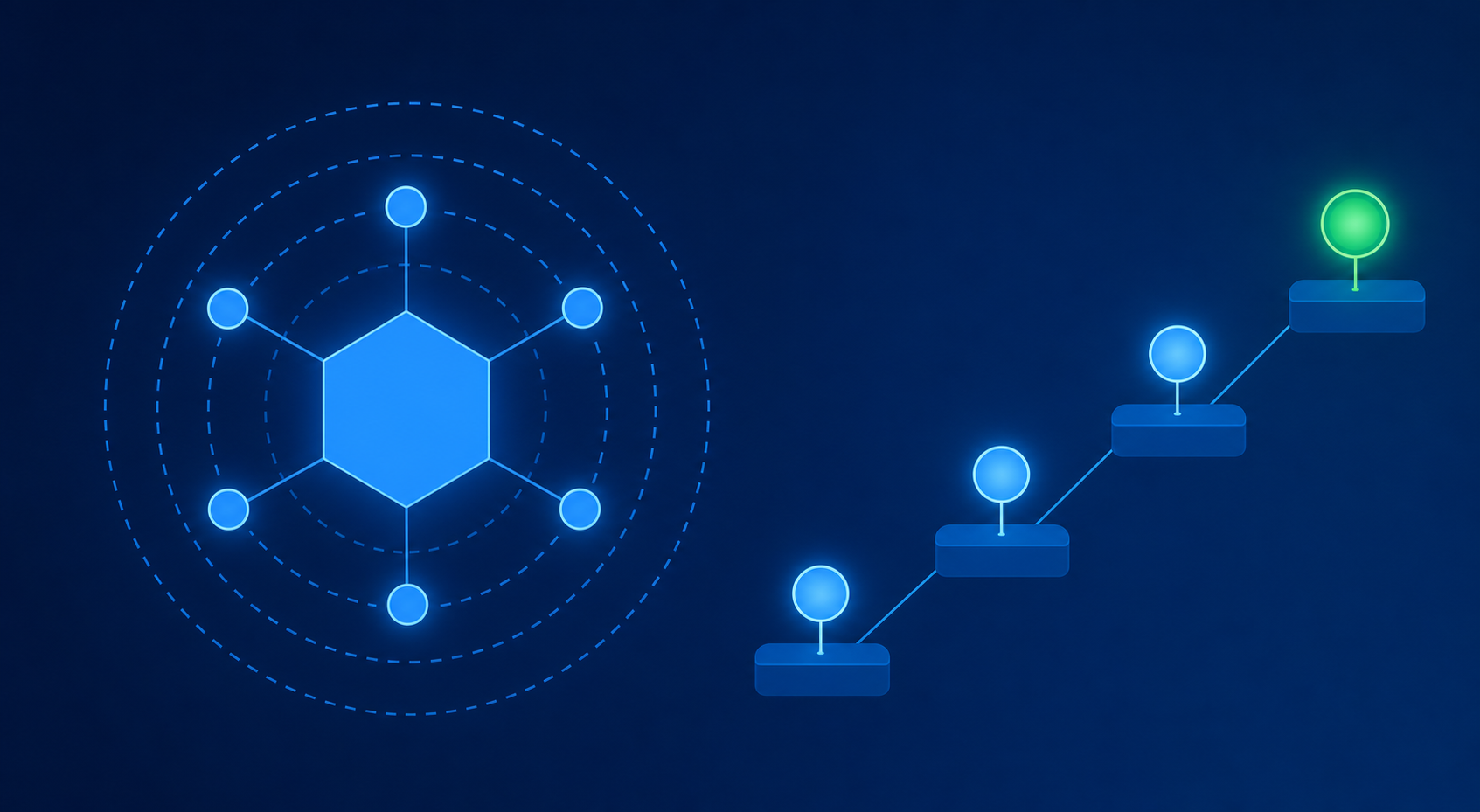
There is no single right provider, only the right provider for a given workload and governance model. IVI selects AWS-native infrastructure when governance demands it, and specialty providers such as Lambda when the economics lead and the controls are satisfied another way. Because the managed services fee is priced against the alternative of running your own ML platform team, not against the GPU cost, the underlying compute stays a transparent, low-margin pass-through, disclosed at 10 to 15 percent. You get the provider that fits, not the provider that pads the margin.
Is This the Right Fit?
Private AI isn't the right call for every team, and we'd rather tell you that in the first conversation than the sixth month. Here's how we think about fit.
- ✓You spend $15K+ per month on frontier APIs touching proprietary data
- ✓Your differentiation lives in your data, processes, or domain knowledge
- ✓Executive alignment on private AI as a strategic direction
- ✓You don't want to hire an ML platform team to get there
- −API spend under $8K per month with no sovereignty driver
- −Exploring, not committing to production AI
- −Workloads are commodity and well-served by APIs
Continue reading · The private AI series
Your competitive moat is training someone else's model
Why crown-jewel data doesn't belong on shared frontier infrastructure.
The right sequence for building private AI infrastructure
Rent, baseline, own: size for evidence, not estimates.
Aegis Private AI: the complete picture
The full private AI thesis, from data sovereignty to the staged build.
Is Aegis Private AI the Right Fit for You?
A 45-minute conversation with an IVI solution architect. No slideware, just an informative conversation.
Get a Readiness Assessment →Last reviewed July 07, 2026 · Next review September 30, 2026 · Content owner IVI