
Rent, Baseline, Own: The right sequence for building private AI infrastructure
You cannot size a cluster you have never measured. Buying GPUs first means guessing with capital. There is a better order of operations, and it starts by making your real consumption visible.
Engineered on the enterprise stack IVI already runs





Why You Cannot Size Your AI Infrastructure Yet
Ask most enterprises how many GPUs they need and the honest answer is a shrug. That is not a competence gap. It is a visibility gap. When your AI runs through a frontier API, you buy outcomes by the token, and the provider absorbs every infrastructure decision behind that price: how many GPUs, at what utilization, with what memory headroom, split how you like between training and inference. You never see the shape of your own demand, because the pricing model was designed to hide it.
That works fine until the economics or the data exposure no longer make sense and you want to bring the workload in house. Now the hidden number matters enormously. Buy too much and you have stranded capital sitting at low utilization. Buy too little and you throttle the workload that justified the project. Either way you are guessing, and hardware is an expensive thing to guess about.
The reframe: the barrier to private AI is not the models. Open weights have closed most of the capability gap for enterprise-aligned work. The barrier is that you have never been allowed to measure your own requirement. So measure it first. Then buy.
Phase 1, Rent: Time to Value in Weeks
The fastest way to a fine-tuned model in production is not to buy anything. It is to rent dedicated GPU capacity from a vetted enterprise provider and get to work. In a managed rental deployment, IVI provisions the environment, selects the base open-weights model (Llama, Mistral, Qwen, and similar), executes the fine-tune (full or LoRA and QLoRA), stands up serving and evaluation, and wires in Aegis PM observability from the first day.
Time to first fine-tuned model is measured in weeks. And critically, this is dedicated compute with real data sovereignty: dedicated GPUs rather than a shared multi-tenant pool, customer-controlled encryption keys, US-only compute, optional customer-owned object storage so data can stay in your cloud account, and private network paths where you need them. Rent is not a pilot you throw away. It is production, instrumented from the start.
Where frontier APIs still lead
- •General-purpose reasoning on novel tasks
- •Low-volume, low-sensitivity workloads
- •Commodity content generation
- •Experimentation and prototyping
Where private models pull ahead
- ✓Tasks fine-tuned on your proprietary data
- ✓High-volume production workloads
- ✓Data-sovereign or regulated environments
- ✓Predictable, controllable economics
Phase 2, Baseline: Measure What You Were Never Shown
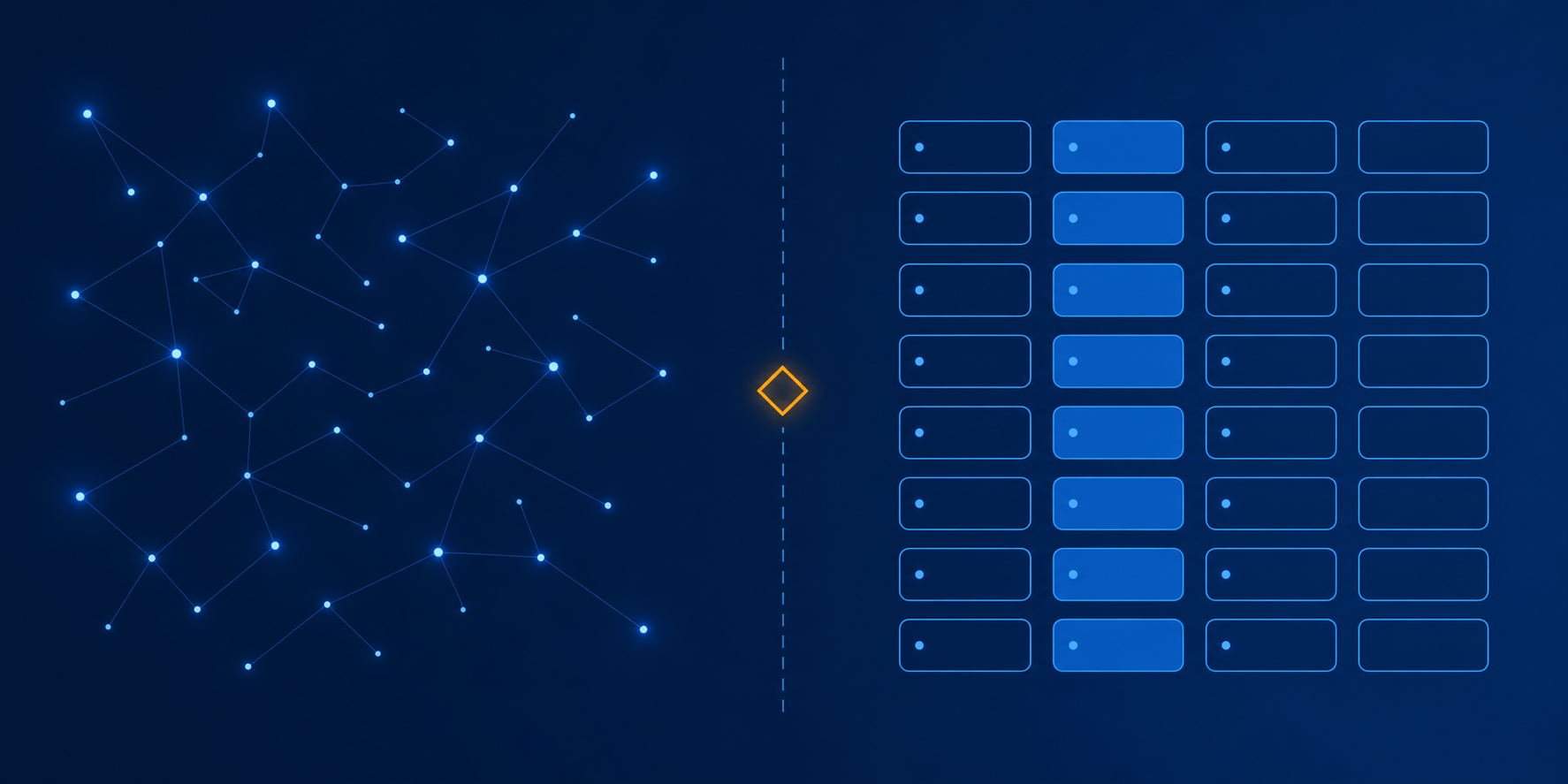
This is the phase the API model never let you have. Six months of live production workload generates the evidence base for every infrastructure decision that follows. The telemetry that actually matters: GPU hours by workload, so you know which use cases consume capacity; utilization curves, the gap between peak and average that decides how much you would over-buy if you sized to peak; the training versus inference split, a different hardware and scheduling profile for each; memory pressure, whether you are compute-bound or memory-bound, which changes the GPU selection; and the growth trajectory, the slope that tells you whether to size for today or for eighteen months out.
At month six you have numbers, not estimates. That is the difference between an infrastructure design you can defend to a CFO and a purchase order built on vendor guesswork.
Phase 3, Own: A Cluster Sized to Evidence
When the economics flip, and at production utilization they do, IVI translates the baseline into an on-prem cluster sized to your consumption rather than to a spec sheet. Most enterprise data centers cannot support 30-plus kW per rack, so the build typically lands in a colocation facility, with IVI facilitating colo selection through existing provider relationships. You own the equipment as capex on your balance sheet. IVI is the single integrator and single point of accountability across the full stack.
Reference architecture, Stage 2: Compute is 4 to 8 nodes of 8-way GPUs on Dell PowerEdge or Lenovo ThinkSystem, with NVIDIA H100, NVIDIA H200, or AMD MI300X selected per engagement on your environment, requirements, and pricing, and B200 forward-looking. Networking is Arista Ethernet with RoCEv2 at 400 Gb/s, deliberately not InfiniBand, because choosing Ethernet decouples the fabric from a single vendor's integrated stack and keeps your unit economics out of that margin structure. Storage is selected per engagement: local NVMe, Dell or Lenovo flash, or Pure FlashBlade//S. Orchestration is Kubernetes on bare metal with GPU-native scheduling, with no hypervisor layer in the training or inference path. Observability is custom LogicMonitor modules feeding Aegis PM. This is workload-appropriate infrastructure from established enterprise partners, chosen on merit rather than dictated by an integrated-stack channel.
The Aegis Private AI journey
Infrastructure evolves. Your operational relationship doesn't.
Want to see where rent-vs-own flips for you?
Our break-even calculator shows exactly when dedicated infrastructure beats API pricing at your token volumes.
Open the Economics Calculator →What Complete Control Means
Control isn't a compliance checkbox. It's the difference between a vendor relationship and infrastructure you actually own. Four things have to be true for that to hold up under scrutiny, not just under a sales pitch.
Dedicated GPU Compute
Never shared, never multi-tenant. Isolated from provisioning through steady state.
Customer-Managed Keys
Encryption keys in your KMS. Data can remain in your object storage. Your governance boundary.
Full Weight Custody
You own model weights and the pipeline. Take them with you if you leave.
US-Only Residency
Compute and data stay in US regions. Private network paths via VPN or Direct Connect.
How the Engagement Works
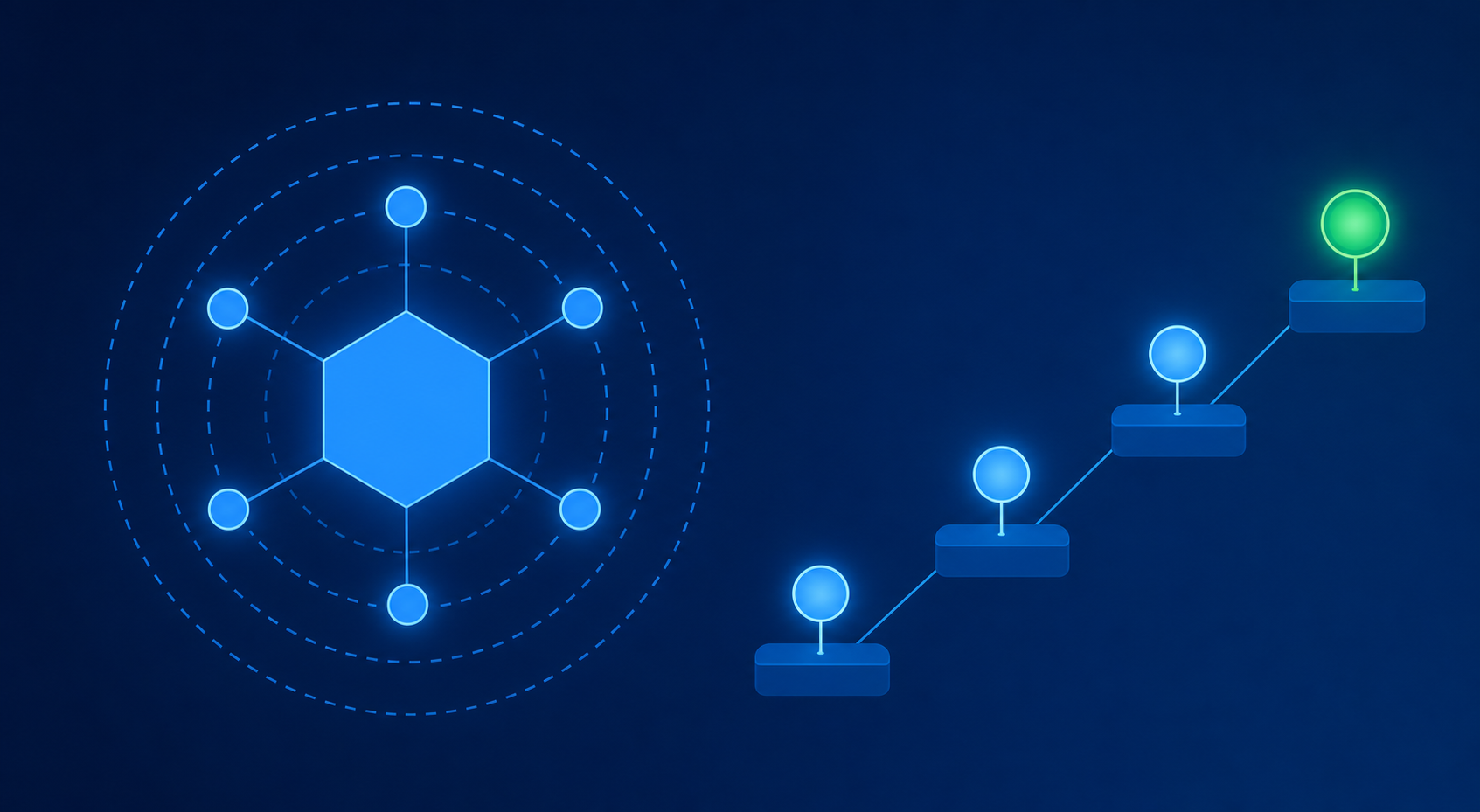
Four stages, one team, from first conversation to steady-state operations. No handoff between the people who scoped it and the people who run it.
-
01
Assess
Readiness assessment. Workload triage. Data sensitivity scoring. Sizing framework.
-
02
Deploy
Environment provisioning at the rented GPU provider. Base model selection. Initial fine-tune. Production cutover.
-
03
Baseline
Six months of live workload telemetry via Aegis PM. Utilization curves, cost per workload, growth trajectory.
-
04
Migrate
On-prem cluster design against baseline. Colocation buildout. Controlled workload cutover. No production disruption.
Is This the Right Fit?
Private AI isn't the right call for every team, and we'd rather tell you that in the first conversation than the sixth month. Here's how we think about fit.
- ✓You spend $15K+ per month on frontier APIs touching proprietary data
- ✓Your differentiation lives in your data, processes, or domain knowledge
- ✓Executive alignment on private AI as a strategic direction
- ✓You don't want to hire an ML platform team to get there
- −API spend under $8K per month with no sovereignty driver
- −Exploring, not committing to production AI
- −Workloads are commodity and well-served by APIs
Continue reading · The private AI series
Your competitive moat is training someone else's model
Why crown-jewel data doesn't belong on shared frontier infrastructure.
Aegis Private AI: the complete picture
The full private AI thesis, from data sovereignty to the staged build.
What GPU compute actually costs
Hyperscalers, specialty providers, and API spend, compared honestly.
Is Aegis Private AI the Right Fit for You?
A 45-minute conversation with an IVI solution architect - no slideware, just an informative conversation.
Get a Readiness Assessment →Last reviewed July 07, 2026 · Next review September 30, 2026 · Content owner IVI