
Network source of truth with NetBox
Centralize network inventory, topology, addressing, and service relationships into a structured data model that becomes the foundation for automation and operations.
Network Automation & NetDevOps
Use NetBox, Ansible, Git-based workflows, and cloud-aligned automation patterns to manage network state across Cisco, Arista, Palo Alto Networks, and AWS-connected environments.
Engineering-led, vendor-agnostic automation designed for real-world operations.
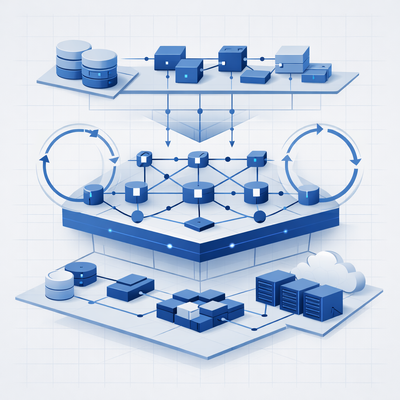



Most network teams still operate in a manual-first model. Data-driven network automation replaces fragmented tools and engineer memory with a structured source of truth, repeatable workflows, and a scalable operating model aligned to modern infrastructure demands.
Network state is often spread across spreadsheets, diagrams, tickets, and tribal knowledge. That slows change execution, increases drift, and makes multi-vendor and hybrid networking harder to manage with confidence.
Intelligent Visibility designs and implements a practical NetDevOps model built on NetBox, Ansible, and Git-based workflows. The focus is on creating a usable source of truth, enabling repeatable automation, and supporting long-term operational success.
Centralize network inventory, topology, addressing, and service relationships into a structured data model that becomes the foundation for automation and operations.
Standardize and automate provisioning, updates, and validation tasks across Cisco, Arista, and Palo Alto Networks without relying on proprietary lock-in.
Introduce version control, peer review, and testing into network workflows to improve consistency and reduce operational risk.
Extend automation practices into AWS-connected environments, including VPC and Transit Gateway-aligned connectivity models.
We build a structured foundation first, then layer in automation workflows that align with how your environment is actually operated.
Model the environment in NetBox and define ownership for key network data elements that drive consistent change.
Implement Ansible-based workflows for repeatable network changes, validation, and operational tasks across supported platforms.
Adopt Git-based workflows, review processes, and testing practices that support long-term scale and cleaner handoffs.
Each engagement delivers a production-ready foundation designed for long-term operational use, not just a lab demo.
A structured source of truth aligned to your network architecture, operating model, and automation goals.
Production-ready Ansible workflows for provisioning, updates, validation, and targeted operational tasks.
A defined approach to version control, review, testing, and promotion of network changes.
Automation patterns designed for Cisco, Arista, and Palo Alto Networks environments with room to expand over time.
Guidance for integrating on-prem networking with AWS environments in a consistent, supportable operating model.
This approach improves operational consistency, reduces manual effort, and creates a scalable foundation for network automation.
This solution is designed for organizations moving from manual operations to a more scalable automation model.
Most organizations should take a phased approach to network automation. The right starting point depends on data maturity, workflow readiness, and cloud connectivity requirements.
Focus on building a reliable data model in NetBox before expanding automation so workflows run on trusted inputs.
Best for teams whose environment is still managed through spreadsheets, tickets, and engineer memory.
Automation value arrives more gradually because the data foundation is built first.
Recommended when data quality and ownership are the primary constraints to scale.
Target repeatable tasks that create visible value while improving the broader source of truth in parallel.
Best for teams with enough structure to support a few production-ready automation use cases.
Long-term scale still depends on continued improvement in data consistency and ownership.
Recommended when leadership expects near-term results and the first use cases are well bounded.
Build an automation model that includes both on-prem and AWS networking so hybrid dependencies are managed consistently.
Best for organizations with significant AWS networking requirements and cross-team cloud coordination.
This creates a stronger long-term model but requires more coordination and design discipline up front.
Recommended when AWS connectivity is already central to the network operating model.
These examples show how organizations move from manual processes to structured, scalable network automation.
A team replaces spreadsheets and disconnected records with a structured NetBox implementation that supports cleaner operational decisions.
Network data was inconsistent, incomplete, and spread across multiple systems and people.
NetBox became the authoritative source of network state, relationships, and operational intent.
Engineers gained a cleaner model for planning, validation, and downstream automation.
Designed a practical data model aligned to how the environment is actually operated.
Repeatable Ansible workflows replace manual CLI changes for selected tasks across multiple network domains.
Changes were performed manually across Cisco, Arista, and Palo Alto Networks devices with inconsistent methods.
Ansible workflows standardized execution and reduced dependence on device-by-device manual work.
Teams reduced manual effort, improved consistency, and created cleaner operational handoffs.
Built automation that reflects real operational dependencies rather than abstract lab-only examples.
On-prem and AWS-connected networking are managed through a more consistent model for change and validation.
Hybrid networking changes required manual coordination across infrastructure and cloud teams.
The operating model was extended to include AWS-connected dependencies alongside core network automation workflows.
Teams gained a more consistent process for managing hybrid networking changes and reducing friction.
Aligned source of truth, automation, and cloud connectivity into one practical operating model.
Complete the form and an IVI representative will reach out to you shortly.
Review related solution pages, supporting materials, and additional resources that help explain where this solution fits and how it can be applied.
See how IVI helps teams move from reactive scripting to full-lifecycle automation and orchestration.
Review IVI capabilities for hybrid and public cloud networking design and automation.
See how IVI supports ongoing day two operations for complex infrastructure and platform environments.
Common questions about NetDevOps, network source of truth strategies, and practical automation adoption.
NetDevOps applies structured automation, testing, version control, and data-driven operations to network infrastructure so changes become more repeatable, scalable, and reliable.
NetBox provides a structured source of truth for inventory, topology, IP addressing, and service relationships. That foundation makes automation more accurate and sustainable.
Yes. IVI supports multi-vendor environments including Cisco, Arista, Palo Alto Networks, and AWS-connected network domains using practical automation approaches that avoid unnecessary lock-in.
Most organizations should start by improving data quality and defining a source of truth, then layering in targeted automation workflows that create measurable operational value.
Yes. IVI can align automation practices across on-prem and AWS-connected environments, including networking dependencies related to VPCs and Transit Gateway architectures.
No. The model is valuable anywhere manual network operations, inconsistent data, and repeated change activities are limiting speed, control, or scale.