

Introduction: Beyond Managing the Campus, Toward Securing and Optimizing It Campus networks today...
Why Campus Network Segmentation Is No Longer Optional
For years, enterprise campus networks operated on relatively flat architectures. VLANs provided basic traffic separation, but true segmentation — the kind that limits lateral movement and enforces least-privilege access at the network layer — was reserved for data centers and security-sensitive enclaves.
That era is over. The combination of IoT proliferation, hybrid work, regulatory pressure, and increasingly sophisticated lateral movement techniques has made campus microsegmentation a baseline requirement for any organization serious about operational resilience and security posture.
The Flat Network Problem
In a traditional campus network, once a device authenticates and joins a VLAN, it typically has broad reachability across the network. A compromised IoT sensor on the manufacturing floor can reach the ERP system. A contractor's laptop on the guest VLAN can discover devices it has no business communicating with. A ransomware payload that lands on one workstation can traverse the entire campus without hitting a single enforcement point.
This isn't theoretical. The majority of ransomware incidents involve lateral movement across flat or poorly segmented networks. The initial compromise is rarely the most damaging event — it's what happens after, when the attacker moves freely through the environment looking for high-value targets.
Network security teams understand this. But historically, implementing campus-wide segmentation meant managing thousands of ACLs, maintaining complex firewall rule sets, and dealing with the operational overhead of policy changes every time a new device or application was deployed. The operational burden often outweighed the security benefit.
What Modern Campus Segmentation Looks Like
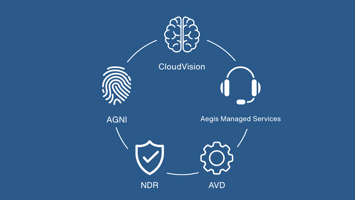
Modern campus segmentation has moved beyond ACLs. Platforms like Arista's CloudVision with integrated segmentation capabilities enable policy-based segmentation that operates at the network fabric level rather than on individual switch port configurations.
The key shift is from port-based security to identity-based security. Instead of defining what VLAN a port belongs to and what ACLs apply to that VLAN, modern segmentation defines policies based on the identity of the device, user, or workload — regardless of where they connect physically.
This approach delivers specific operational advantages: Policy follows the device, not the port — A medical device gets the same segmentation policy whether it connects in Building A or Building B. Centralized policy management means changes are made in CloudVision and propagated across the entire campus fabric automatically. Automated device classification ensures new devices are classified and segmented on connection rather than requiring manual VLAN assignment. Native east-west visibility makes traffic pattern observability part of the platform rather than requiring separate monitoring tools.
Arista Campus Segmentation and Fabric Architecture
Arista's campus segmentation capabilities provide macro-level segmentation across the entire campus fabric without requiring per-port ACL management. They create logical security zones that span the entire network and enforce policy at every hop.
Combined with Arista's campus switches and CloudVision, organizations get a unified architecture where segmentation policy, network configuration, and operational visibility are managed through a single platform. The operational overhead that historically made campus segmentation impractical is significantly reduced.
For organizations with Arista campus infrastructure, segmentation capabilities are integrated into the EOS platform and CloudVision management system. This matters because segmentation doesn't introduce new failure modes, new management consoles, or new troubleshooting workflows. It operates within the same operational model your network team already uses.
Purpose-Built Campus Segmentation Services
IVI helps organizations design and implement campus segmentation as part of broader campus modernization engagements. Our approach includes traffic pattern assessment — analyzing current east-west communication patterns and identifying segmentation requirements. We provide policy design services, creating segmentation policies aligned to business and compliance needs.
Implementation follows a phased deployment model to minimize operational disruption, with careful integration planning to connect segmentation with existing security tools and ITSM workflows. Through IVI's Aegis co-managed services, organizations can maintain ongoing segmentation governance — ensuring policies stay aligned as the environment changes, new devices are properly classified, and segmentation posture is continuously monitored.
This approach integrates naturally with broader cybersecurity initiatives and zero trust architecture implementations, providing the network-layer enforcement that makes identity-based security policies effective.
A Practical Path Forward
Campus segmentation doesn't require a massive project. Most organizations start with a traffic analysis to understand their current east-west communication patterns, then define initial macro segments that separate high-risk device categories (IoT, OT, guest) from business-critical systems. From there, policy can be refined iteratively based on observed traffic and evolving requirements.
The key is understanding that modern segmentation platforms make this practical in ways that weren't possible with traditional VLAN and ACL approaches. With fabric-based segmentation and centralized policy management, the operational overhead that historically prevented campus segmentation implementation is no longer a barrier.
The important thing is to start. Every day a campus network operates without meaningful segmentation is a day the organization carries unnecessary risk from lateral movement, compliance gaps, and operational blind spots.
Key Takeaways
- Campus microsegmentation has evolved from ACL-based approaches to fabric-level, identity-based policy enforcement
- Modern platforms like Arista CloudVision eliminate the operational overhead that historically made campus segmentation impractical
- Segmentation policy should follow device identity rather than physical port location for true mobility and security
- Organizations can start with macro-level segmentation and refine policies iteratively based on traffic analysis
- Integrated segmentation platforms reduce complexity by managing policy, configuration, and visibility through a single system