Skip to content

AI Agents for Customer Service Execution

Deploy AI Agents That Execute Real Customer Service Work

Autonomous AI agents can understand customer intent, make decisions within defined guardrails, and complete multi-step service tasks across connected systems.

In Amazon Connect, this enables automation that moves beyond scripted bot flows into real operational execution.

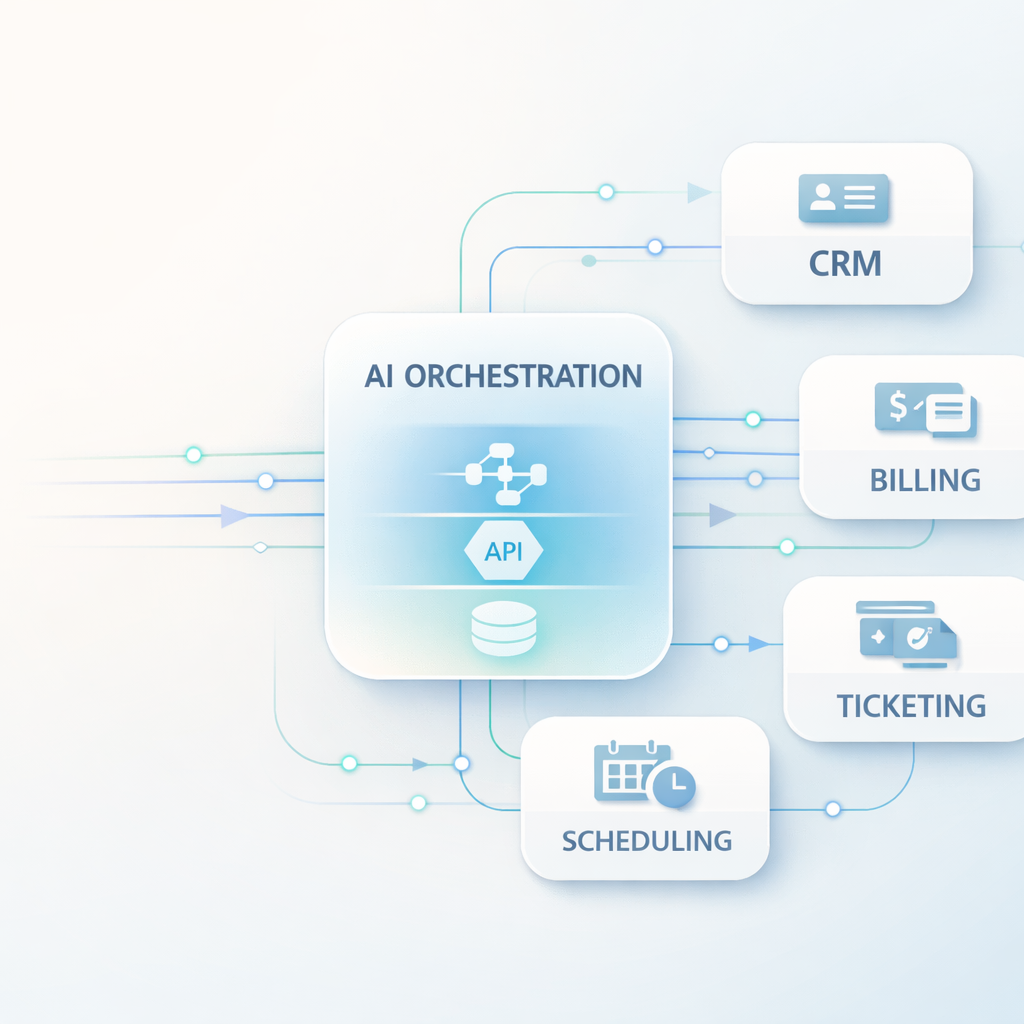
AI agent executing customer service workflows across Amazon Connect and enterprise systems.
Solution Overview

Automate Customer Service Workflows with AI Agents

Move beyond basic bots and IVR by deploying AI agents that can execute real service tasks across your systems. This approach focuses on defined use cases, controlled automation, and measurable outcomes from day one.

Intelligent Visibility designs and deploys AI agents using Amazon Bedrock and Amazon Connect to automate customer service workflows across CRM, billing, scheduling, and internal systems. These agents use APIs, business rules, and controlled decision logic to execute tasks, not just respond to requests. The result is faster resolution, reduced manual effort, and automation that delivers measurable operational value.

Where Traditional Automation Breaks Down

Where Traditional Automation Breaks Down

Traditional bots and IVR systems can handle simple, predefined interactions, but they fail when requests require multiple steps, system lookups, or decision-making. Customers are forced to repeat information, agents spend time on repetitive tasks, and automation does not extend into meaningful operational workflows. As a result, organizations struggle to reduce workload or improve service outcomes at scale.

Limited to scripted interactions
Repetitive multi-step tasks handled manually
Disconnected systems require agent coordination
Poor experience when automation fails
AI Agents That Execute Real Work Across Your Systems

AI Agents That Execute Real Work Across Your Systems

Intelligent Visibility builds and deploys AI agents within Amazon Connect that can execute real customer service workflows across your systems. Using Amazon Bedrock, these agents interpret requests, apply business rules, and take action through API integrations.

Rather than replacing existing systems, the agents orchestrate work across CRM, ticketing, scheduling, billing, and internal platforms. Each use case is implemented with guardrails, escalation paths, and observability, ensuring automation is controlled, reliable, and operational from day one.

What the AI Agent Does

  • Interprets customer intent and determines next actions
  • Executes multi-step workflows across systems
  • Uses APIs to interact with CRM, billing, scheduling, and internal tools
  • Applies business rules and decision logic in real time

How It Operates in Production

  • Escalates to human agents with full context when needed
  • Enforces guardrails and approval logic
  • Provides visibility into actions and performance
  • Supports phased rollout by use case
How It Works

How It Works

We take a use-case-driven approach to deploying AI agents, ensuring each workflow is clearly defined, safe to automate, and measurable from launch

1

Identify High-Value Use Cases

We prioritize customer requests that are frequent, repetitive, and structured enough to automate reliably.

2

Design Agent Behavior and Integrations

We define how the agent interprets requests, what systems it can access, and how it executes actions through APIs.

3

Implement Guardrails and Controls

We apply business rules, approval logic, and escalation paths to ensure safe and predictable automation.

4

Launch and Optimize

We deploy the agents, monitor performance, and continuously refine workflows based on real usage.

What You Get

What You Get

A defined, production-ready implementation of AI agents that can automate real customer service workflows within your existing environment.


AI use-case identification workshop

Agent architecture and prompt design

API and AWS Lambda integrations

Guardrails, approval logic, and escalation design

Testing, validation, and optimization plan

Outcomes

Outcomes

  • Reduced manual effort for high-volume service tasks
  • Faster resolution of common customer requests
  • More consistent execution of service workflows
  • Increased operational value from Amazon Connect
Ideal Fit

Ideal Fit

  • Organizations with high volumes of repeatable service requests
  • Teams managing workflows across multiple systems
  • Environments where automation is limited to basic bots or IVR
  • Leaders looking for practical, production-ready AI
Decision Framework

Choose the Right Starting Point for AI in Customer Service

Not every organization needs the same path to AI-driven customer service execution. These options help clarify where to start based on your environment, operational goals, and level of readiness.

Full Platform Transformation

Best for larger modernization efforts

Redesign customer service around a new operating model, platform strategy, and broader automation goals. This path is appropriate when organizations are planning significant CX or contact center transformation, not just workflow improvement.

Best Fit

Organizations already committed to replacing legacy platforms, restructuring service operations, or making a larger long-term investment in customer experience transformation.

Tradeoffs

This path requires more time, budget, change management, and organizational alignment. It may deliver broader long-term value, but it typically has a longer timeline and higher implementation risk than an overlay approach.

IVI Recommendation

Intelligent Visibility recommends this path when platform replacement is already part of the roadmap or when current systems cannot support long-term customer experience goals. Even in these cases, defining high-value workflows early can reduce risk and improve the transition plan.

Human-Assisted AI Workflow Execution

Best for higher-control environments

Use AI agents to gather context, retrieve information, and prepare actions while keeping a human agent in the loop for final execution or approval. This approach supports automation progress without handing full control to the agent.

Best Fit

Organizations with stricter approval requirements, sensitive customer interactions, or limited readiness for full autonomous execution.

Tradeoffs

This approach reduces some manual work, but it does not deliver the same level of automation as full agent execution. It is often a transitional model rather than an end state.

IVI Recommendation

Intelligent Visibility recommends this model when governance, approval requirements, or operational caution make full execution unrealistic in the near term. It can be a strong interim step while the organization builds confidence in AI-driven workflows.

Real-World Proof Points

What AI Agents Can Execute in Real Customer Service Environments

These examples show how Intelligent Visibility designs AI agents in Amazon Connect to complete real service workflows across business systems. Each proof point focuses on defined use cases, connected systems, and operational outcomes rather than generic AI claims.
Find the Right Location With Real Availability

Location Finder

AI agents can help customers find the best service location based on proximity, business hours, and real inventory or service availability. This turns a common multi-step request into a fast, guided experience.

Scenario

A customer wants to find the closest location that is currently open and has a specific item or service available. Instead of searching manually or speaking to an agent, the AI agent gathers the customer’s location, checks business rules, and identifies the best match.

Systems and Actions

The AI agent collects the customer request in Amazon Connect, queries location and inventory systems through APIs, applies business rules such as open hours or service coverage, and returns the best available option. If needed, it can also route the customer to the correct team or next step.

Additionally, the client had a well-developed knowledge base as part of their human agent onboarding/training. This was incorporated into the AI agent training so that if the conversation led to more general questions, we could answer those questions without reverting to a human agent.

Outcome

> 90% of these calls are handled without human agent involvement. Customers get faster answers, agents avoid repetitive location lookup work, and the business can provide more consistent guidance across locations.

Why Intelligent Visibility

Intelligent Visibility designs the integration and decision logic required to integrate Amazon Connect to business systems and make these workflows operational in production, not just in a demo.

Schedule Appointments Without Agent Intervention

Appointment Scheduling

AI agents can manage appointment requests from start to finish by collecting the right inputs, checking availability, and confirming the booking across connected systems.

Scenario

A customer needs to schedule, reschedule, or cancel an appointment. The request may involve location, service type, date preferences, and account validation, all of which normally require multiple steps and systems.

Systems and Actions

The AI agent captures appointment details in Amazon Connect, checks scheduling platforms (CRM, EMR, and Calendars) through APIs, validates the request against availability and business rules, and books or updates the appointment. Confirmation details can then be returned to the customer automatically.

Outcome

Routine scheduling tasks are completed faster, agent workload is reduced, and customers receive a more consistent and convenient service experience.

Why Intelligent Visibility

Intelligent Visibility defines the workflow logic, integrations, and guardrails required to make appointment automation reliable across scheduling, identity, and customer service systems.
Provide Accurate Policy Answers With Context

University Policy and Information Retrieval

AI agents can retrieve policy and procedural information from approved sources and present it in a way that is relevant to the customer’s question, while still escalating when exceptions or ambiguity arise.

Scenario

A student or parent needs an answer about policies, deadlines, eligibility, or administrative procedures. These questions are common but often require searching across multiple knowledge sources or interpreting policy context correctly.

Systems Involved

The AI agent accepts the request in Amazon Connect, retrieves relevant information from approved policy or knowledge systems, applies context and response rules, and returns an accurate answer. When a request falls outside defined boundaries, the interaction can be escalated to a person with the full context preserved.

Outcome

Customers get faster and more consistent answers, administrative teams spend less time on repeat questions, and policy information is delivered in a more controlled way.

Why Intelligent Visibility

Intelligent Visibility helps define approved knowledge sources, response boundaries, and escalation criteria so policy-related automation stays accurate, governed, and operationally safe.

Frequently Asked Questions

What are AI agents in Amazon Connect?

AI agents are systems that can interpret customer requests, make decisions using defined business rules, and execute actions across connected systems. Intelligent Visibility deploys these agents within Amazon Connect so they can complete real customer service workflows, not just respond to questions.

How is this different from chatbots or IVR?

Chatbots and IVR systems follow predefined scripts and decision trees. AI agents can handle multi-step requests, interact with multiple systems, and take action using APIs and business logic. This allows them to complete tasks such as updating records or scheduling services instead of simply providing answers.

What types of customer service workflows can be automated?

Common use cases include appointment scheduling, account updates, order status requests, ticket creation, and policy or information retrieval. Intelligent Visibility helps identify and implement the specific workflows that are safe, repeatable, and valuable to automate in your environment.

Can I use this module with existing HubSpot themes?

Yes, this module integrates smoothly with any HubSpot theme, complementing your design and functionality needs.

Do we need to replace our existing contact center platform?

No. AI agents can be deployed within Amazon Connect and integrated with your existing systems. This allows you to introduce automation and improve customer experience without requiring a full platform migration.

How do AI agents interact with our systems?

AI agents connect to your systems through APIs and integrations. They can retrieve data, update records, trigger workflows, and coordinate actions across EMR, CRM, billing, scheduling, and other platforms within a single customer interaction.

How do you ensure AI actions are controlled and safe?

We implement guardrails, business rules, and approval logic for every use case. Agents operate within defined boundaries and can escalate to human agents when needed. This ensures automation is predictable, auditable, and aligned with your operational requirements.

What happens when the AI agent cannot complete a request?

The interaction is escalated to a human agent with full context, including what the customer requested and what actions were already taken. This prevents customers from repeating themselves and allows agents to resolve issues more efficiently.

How long does it take to implement AI agents?

Initial use cases can typically be designed and deployed in a matter of weeks. The timeline depends on the complexity of the workflows and the number of systems involved, but we focus on delivering production-ready automation quickly.

How do you determine which use cases to automate first?

We prioritize use cases that have a demonstrable ROI. AI, well-targeted, offers significant improvements in efficiency and customer satisfaction, but priority should be given to the most beneficial use case(s) first.

How is performance measured?

We track metrics such as task completion rate, reduction in manual effort, resolution time, and escalation rates. This provides clear visibility into how the AI agents are performing and where optimization is needed. With our Aegis managed services solution for CX we monitor, and proactively optimize and refine AI agents on an ongoing basis and provide complete visibility to you of key metrics, changes, and performance.

Will this work with our current CRM and backend systems?

In most cases, yes. As long as your systems have APIs or integration points, AI agents can interact with them. Intelligent Visibility designs the integration layer to ensure reliable and secure communication between systems.

What makes this approach different from typical AI projects?

Most AI initiatives focus on pilots or demos. Our approach is use-case-driven and focused on execution. We design, build, and deploy AI agents that complete real work in production environments, with clear guardrails and measurable outcomes.